Parents have a lot of questions right now about the new child savings account rollout tied to the federal “Trump Account” rules. For Kid Saving Account readers, the practical issue is not politics. It is timing, eligibility, and what families should do between now and summer 2026.
What is happening right now
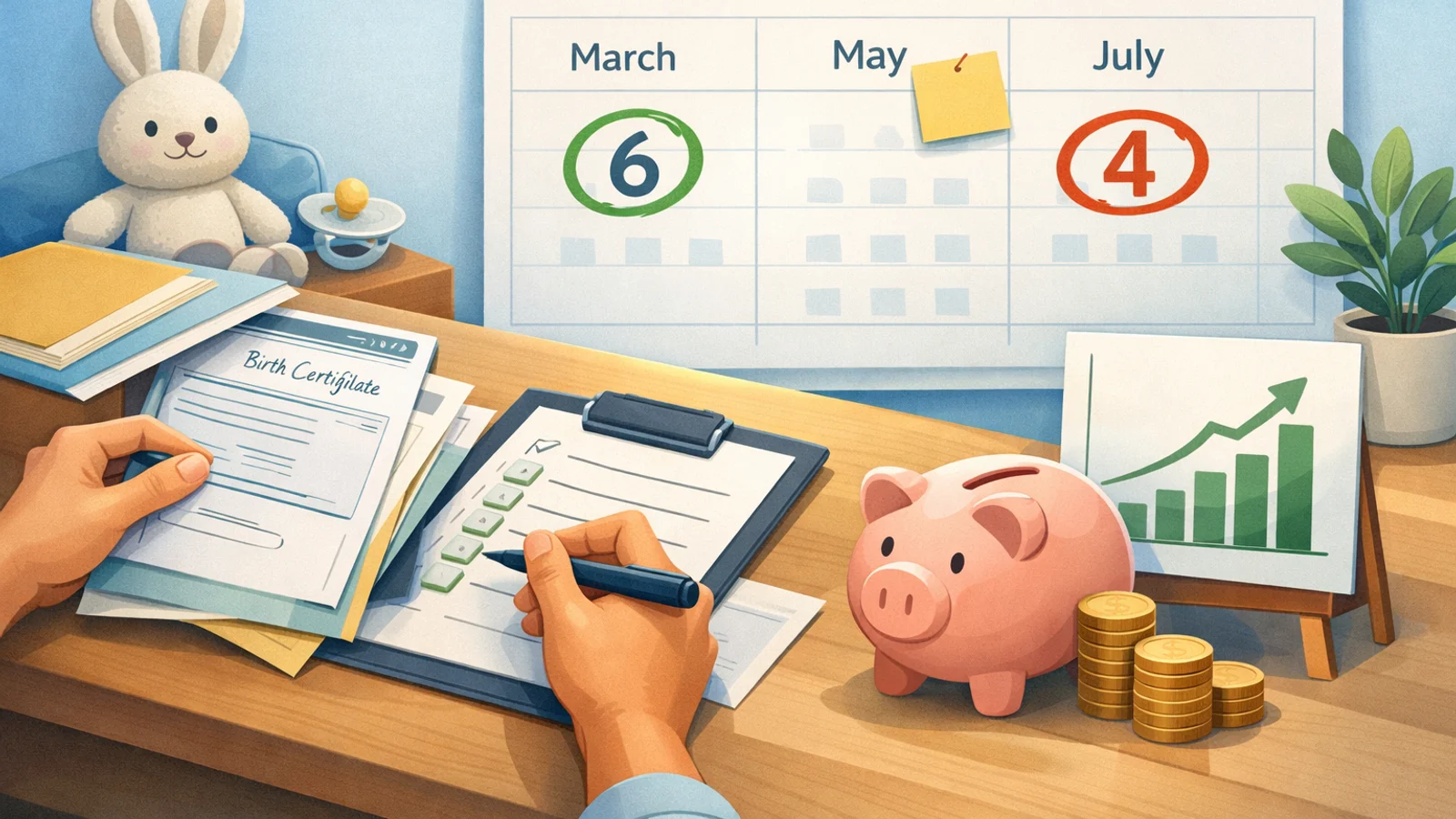
Public guidance from the IRS and Treasury says these child accounts are in the setup phase now, with activation information expected to start going out in May 2026 and contributions not allowed before July 4, 2026. The official program materials also describe a one-time $1,000 government deposit for certain eligible children born in a specific date range, while older children may still be able to have an account opened without that deposit. (whitehouse.gov)
That means March 18, 2026 is still a planning window. For most parents, this is not yet a funding decision. It is an organization and paperwork decision. (irs.gov)
The biggest parent questions in March 2026
1) Does my child qualify for the $1,000 deposit?
Current public guidance says the federal seed deposit applies to children born after December 31, 2024 and before January 1, 2029 if a qualifying account is established for them. Parents of older children may still be able to open an account, but those children generally are not described as eligible for that automatic federal $1,000 contribution. (whitehouse.gov)
2) Can I put money in now?
No. Treasury and IRS guidance says contributions cannot be made before July 4, 2026. That applies to family contributions and, under current guidance, employer contributions as well. (irs.gov)
3) What should I watch for in May 2026?
Families who make the election to establish the account should expect an activation and identity-verification step starting around May 2026. The White House summary and IRS guidance both point to a follow-up process after the initial election is made. (whitehouse.gov)
4) Is this the same as a 529 plan or a custodial account?
No. This is a separate account structure created under federal law, and the public guidance describes it as a new type of tax-deferred account for eligible children. That does not automatically make it the best fit for every family. Some parents may still prefer existing options depending on whether the goal is college, broad investing flexibility, or general family saving. (irs.gov)
What parents should do before May 2026
Here is the practical checklist:
- Confirm your child’s date of birth and whether it fits the currently published eligibility window.
- Make sure the parent or guardian who will handle the account has current tax filing records and identification ready.
- Watch for instructions tied to the account election and activation process.
- Do not assume money will appear automatically without the required setup steps.
- Decide now whether this account will be a small starter balance only, or part of a larger long-term savings plan. (whitehouse.gov)
For parents with newborns or very young children, the main risk right now is missing the setup process when activation notices begin. For parents with older kids, the key question is whether opening the account still fits your family’s goals even without the federal $1,000 seed deposit. (whitehouse.gov)
What to do between May 2026 and July 4, 2026
If you receive activation instructions in May 2026, complete them promptly. The public guidance indicates that activation involves authentication or identity verification before the account is fully opened. Then, once July 4, 2026 arrives, families can evaluate whether to make contributions, subject to the program’s rules and annual limits. (whitehouse.gov)
This gap matters. A lot of parents are treating July 4, 2026 as the first important date, but the better planning date is actually May 2026, because that is when account activation steps are expected to start. (whitehouse.gov)
A simple planning framework for families
If you are comparing this option with your other savings priorities, use this basic order of operations:
- Check eligibility first.
- Complete setup when activation opens around May 2026.
- Review the contribution rules on or after July 4, 2026.
- Compare it with your other savings accounts before adding new money.
- Keep records of forms, notices, and any future deposits.
That approach helps families avoid two common mistakes: assuming the account is fully automatic, and assuming a new federal program should replace every other savings tool they already use. Current guidance does not support either assumption. (whitehouse.gov)
Bottom line for Kid Saving Account readers
As of Wednesday, March 18, 2026, the most important update is straightforward: activation is expected around May 2026, and contributions are scheduled to begin on July 4, 2026. Parents should spend the next several weeks getting organized, confirming eligibility, and preparing for the activation step rather than trying to fund the account early. (whitehouse.gov)
Kid Saving Account is an independent informational brand, not a government agency. Families should review official program materials and consider tax or legal advice for their own situation before making decisions. (trumpaccounts.gov)