Parents looking at children’s savings options in March 2026 are asking a practical question: what should we set up now, and what should we wait for?
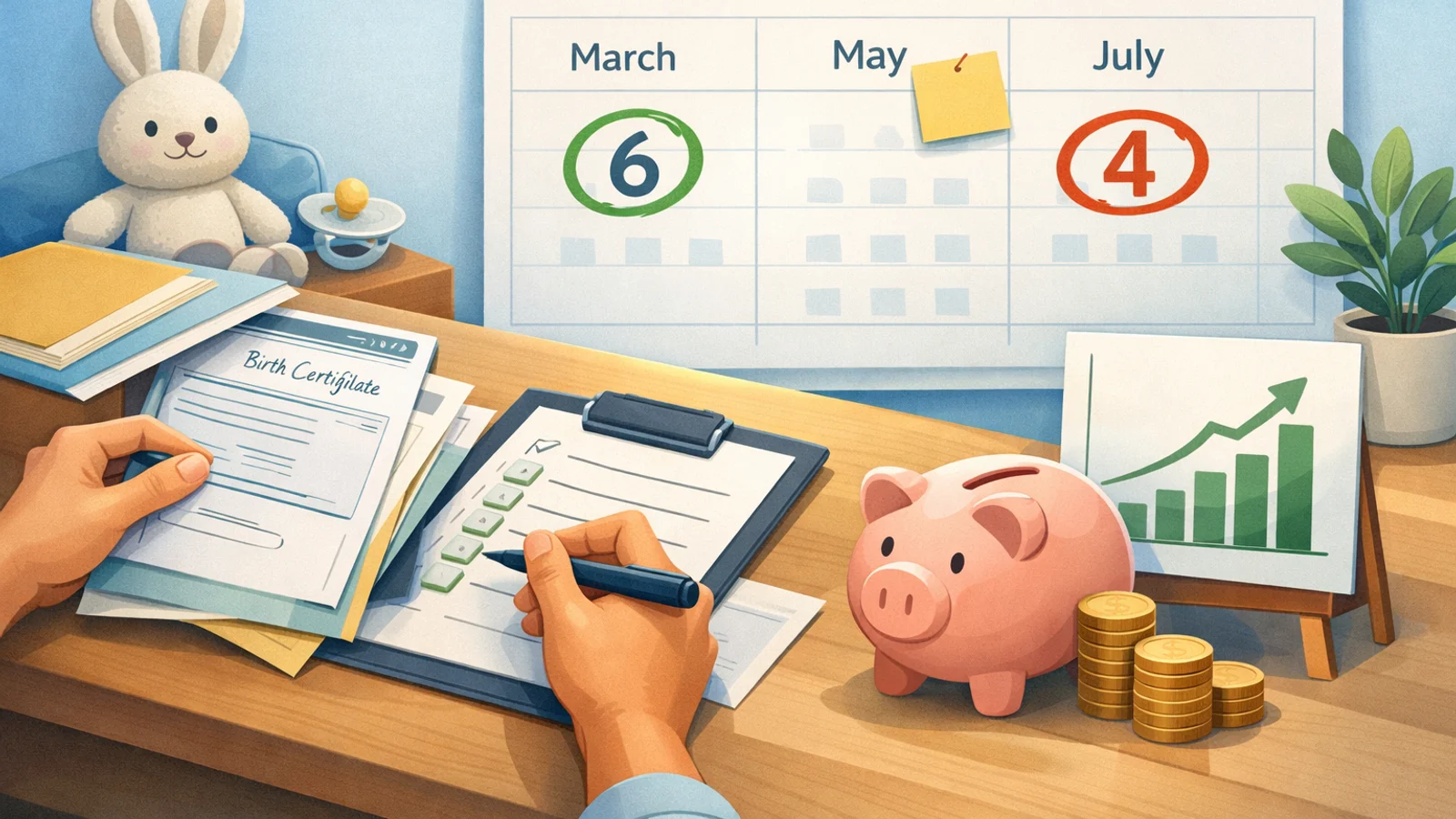
A new federal option is entering the conversation this year: the Trump Account. Public IRS guidance says families can complete the election process now, activation instructions are expected to start going out in May 2026, and contributions cannot begin before July 4, 2026. The IRS also says regular contributions are generally capped at $5,000 per year during the growth period, with separate rules for pilot-program contributions and some employer contributions. (irs.gov)
That makes this a good time for parents to compare four buckets side by side:
- a new Trump Account
- a 529 college savings plan
- a custodial account such as UGMA or UTMA
- a regular kids checking or savings account for short-term money habits
Kid Saving Account is not a government agency, but this is exactly the kind of moment where a clear plan matters. Here is the practical version.
What is changing in 2026
The biggest new development is the 2026 rollout of Trump Accounts. The official government site and IRS guidance both point to a two-step process: first, a parent or other eligible filer makes the election, then Treasury or its agent sends activation instructions beginning around May 2026. The account must be activated before it can fully move into use, and funding starts July 4, 2026. (form.trumpaccounts.gov)
At the same time, 529 plans remain more flexible than many parents realize. IRS guidance confirms that, under current federal rules, certain unused 529 funds can be rolled to a Roth IRA for the beneficiary, subject to conditions including a 15-year account age requirement, a $35,000 lifetime cap, and the annual Roth IRA contribution limit. For 2026, that annual Roth IRA limit is widely reported as $7,500. (irs.gov)
So the 2026 conversation is not really “old account versus new account.” It is more often:
Which account matches this money’s job?
The question parents are really asking
Most families are not choosing one account forever. They are choosing where to send the next dollar.
A simple framework:
- Education-first goal: start with a 529
- General wealth-building with the new federal option in mind: review Trump Account eligibility and timing
- Flexible money for a child that is not limited to education: consider UGMA/UTMA carefully
- Allowance, chores, debit card practice, and spending rules: use a kids bank account
Trump Account vs 529: the most common comparison right now
Here is the short version parents need in March 2026.
A Trump Account may fit if:
- you want to use the new 2026 federal program rules
- you are comfortable waiting until July 4, 2026 for contributions to begin
- you want to track whether your child qualifies for any government seed contribution or other special treatment under the rollout rules
- you want to watch for employer-related contribution opportunities, because IRS guidance says employers may contribute up to $2,500 per year under a qualified employer program, and that amount counts toward the broader annual limit rules described by the IRS (irs.gov)
A 529 may fit if:
- your main goal is education savings
- you want a well-established account you can fund immediately
- you may benefit from state tax treatment, depending on your state
- you like the newer backup option of possible Roth IRA rollovers for unused funds, if the federal requirements are met (irs.gov)
What about a custodial account?
A custodial account can still be the simplest answer when money is meant to be broadly available for the child’s benefit and not tied mainly to education. But parents should remember the tradeoff: that flexibility usually comes with fewer tax advantages than a dedicated education account, and the assets generally become the child’s property under state-law rules when control transfers. That handoff timing depends on state law and account structure, so families should verify details before opening one. (legalclarity.org)
What about a basic kids bank account?
For younger children and early teens, a standard youth checking or savings account often solves a different problem entirely: teaching day-to-day money use.
That is why many families end up with both:
- one account for long-term savings
- one account for practice and spending
Banks are still updating youth products in 2026. For example, Fidelity says its Youth Account experience is being moved into the Fidelity Investments app, and the separate Youth app is retiring in March 2026. Bank of America also launched a family banking product aimed at helping parents supervise and teach money habits. (fidelity.com)
A practical plan for parents in March 2026
If you do not want to overthink this, use this sequence.
Option 1: You want to be ready for the 2026 Trump Account rollout
- Confirm whether your child is eligible under the current public rules.
- Review the election process and required identifying information.
- Watch for activation instructions starting around May 2026.
- Decide now how much you may want to contribute once funding opens on July 4, 2026.
- If your employer may participate, ask HR whether a child-related contribution program is under review. (trumpaccounts.gov)
Option 2: You need to start saving immediately
- Open a 529 if education is your top goal.
- Automate a small monthly amount.
- Keep separate spending money in a youth bank account.
- Revisit the new federal option after activation details are clearer in May 2026. (irs.gov)
Option 3: Grandparents want to help now
- Decide whether the gift is for education, general support, or short-term spending.
- Use the account type that matches that purpose.
- Keep records of who contributed what.
- If you are considering larger gifts, check current tax and gift-planning rules with a qualified professional. (legalclarity.org)
Three mistakes to avoid this spring
1. Waiting for the “perfect” account
For many families, the bigger risk is not choosing the wrong account. It is delaying contributions and missing months of saving.
2. Using one account for every goal
College savings, birthday money, and debit card practice usually work better when they are separated.
3. Assuming the new 2026 program is already fully fundable
It is not. Current IRS guidance is clear that contributions cannot be made before July 4, 2026, even if the election has already been filed or activation steps begin earlier. (irs.gov)
Bottom line for parents
As of Friday, March 20, 2026, the smartest move is usually to treat children’s savings as a layered plan.
- Use a 529 for education-focused savings you want to start now.
- Use a youth bank account for teaching habits and managing allowance.
- Use a custodial account only when broad flexibility is the priority and you understand the ownership tradeoffs.
- Track the Trump Account rollout if the new 2026 federal option may fit your family, with activation expected around May 2026 and contributions starting July 4, 2026. (whitehouse.gov)
For most parents, the best next step is simple: decide what the money is for, open the account that matches that goal, and set the first automatic contribution now.