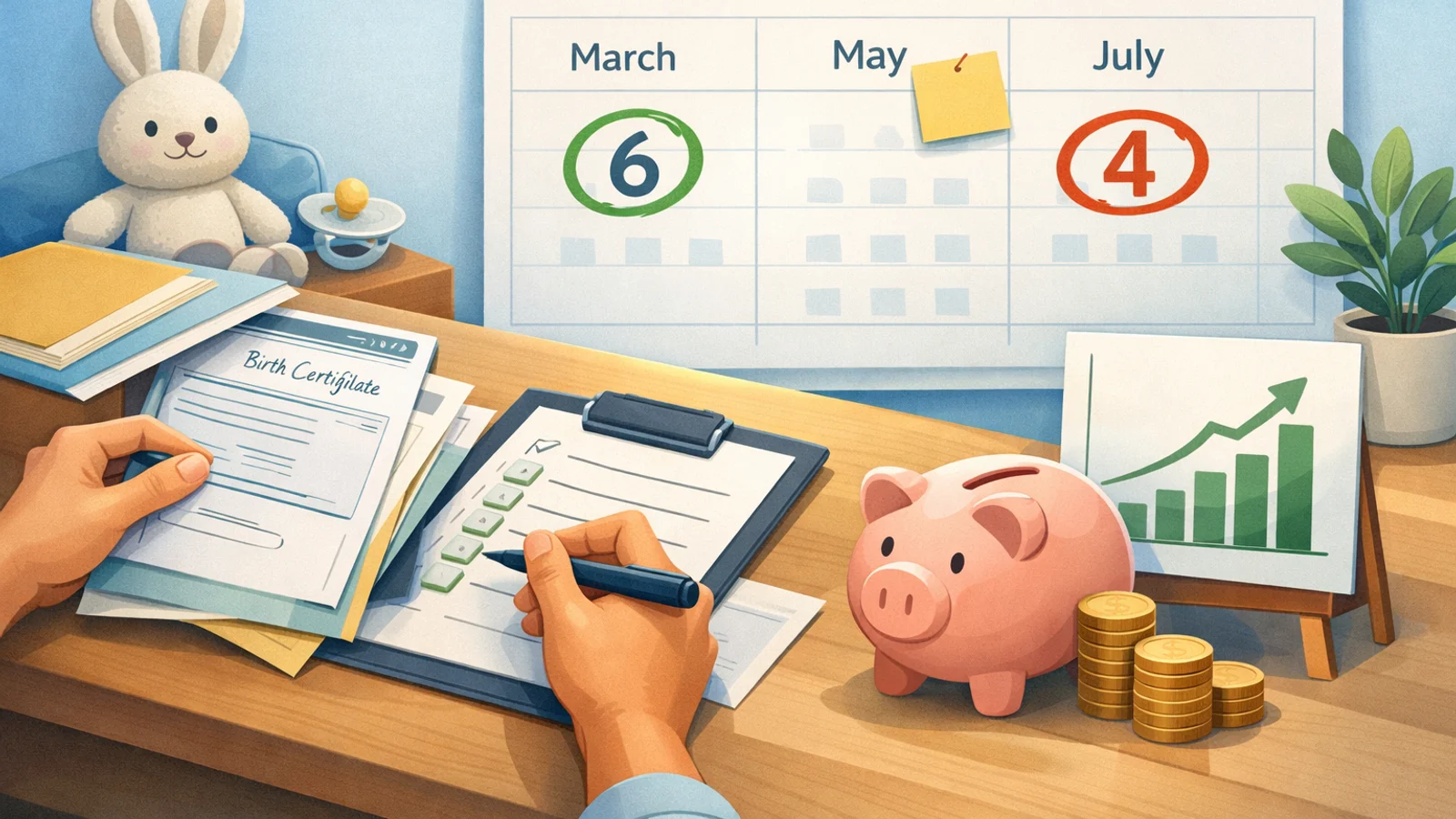
Phụ huynh đang xem xét tùy chọn đầu tư liên bang mới cho trẻ em vào năm 2026 đều gặp cùng những câu hỏi cơ bản: Nó đã mở chưa? Ai đủ điều kiện? Khi nào $1,000 xuất hiện? Và chúng tôi nên chờ hay chuẩn bị giấy tờ ngay bây giờ? Hướng dẫn công khai từ IRS và Treasury đã trả lời một số câu hỏi đó, mặc dù việc triển khai đầy đủ vẫn đang được đưa vào vị trí. (irs.gov)
What parents need to know right now
The current public timeline is fairly specific:
- Initial account activation is expected around mid-2026, with IRS materials pointing parents to an authentication and opening process and referencing online elections beginning in the middle of 2026. (irs.gov)
- Contributions cannot begin before July 4, 2026. That includes regular family contributions and the government’s pilot-program deposit timing. (irs.gov)
- For children who qualify for the pilot program, Treasury plans a one-time $1,000 contribution after a valid election is made and the account is opened, but not earlier than July 4, 2026. (irs.gov)
For Kid Saving Account readers, the practical takeaway is simple: March 17, 2026 is still a preparation window, not a funding window. Parents can start organizing documents and learning the rules now, but they should not expect to deposit money before July 4, 2026. (irs.gov)
The biggest parent questions in March 2026
1. Is this live today?
Not fully in the everyday sense most families mean. The IRS has released proposed regulations and instructions tied to the opening process, but public materials still describe online opening as something expected around the middle of 2026. (irs.gov)
2. Which children may qualify for the $1,000 pilot contribution?
IRS instructions say the child must meet several conditions, including being born after December 31, 2024 and before January 1, 2029, being a U.S. citizen, having an SSN, and not already having had a prior pilot-program election processed. The authorized individual also must make the election. (irs.gov)
3. Who can contribute later?
Public federal guidance says contributions may come from the child, parents or guardians, grandparents, family members, friends, employers, and in some cases qualifying charitable organizations or government entities for a broader class of children. (whitehouse.gov)
4. How much can go in each year?
Current White House and IRS materials say the regular annual contribution limit is $5,000 per child, with cost-of-living adjustments after 2027. Certain broader program contributions from qualifying charitable organizations or government entities may be treated differently. (whitehouse.gov)
5. How are these accounts invested?
The current federal description says the accounts are limited to broad U.S. equity index funds meeting specific rules, including no leverage and a low fee cap. That means parents should expect a narrow, rules-based investment menu rather than a wide brokerage-style set of choices. (whitehouse.gov)
A simple planning checklist for parents
If you want to be ready when activation notices begin appearing around May 2026 and the account-opening flow expands in mid-2026, here is the practical checklist:
- Confirm your child’s identifying documents. Make sure the child has a valid Social Security number and that your own tax records match the child’s legal name and date of birth. IRS materials make SSN status central to eligibility. (irs.gov)
- Watch for the account-opening process. IRS instructions reference Form 4547 and also point to an online option expected in the middle of 2026. (irs.gov)
- Do not plan on depositing money before July 4, 2026. If you are budgeting for grandparents or family gifts, set the cash aside first instead of assuming the account can already accept it. (irs.gov)
- Decide whether this fits your broader savings plan. Because the investment choices are tightly restricted and the rules are new, many families will want to compare this account with other child-saving options they already use. This is a planning question, not a one-size-fits-all answer. The Congressional Research Service notes that child savings account designs vary a lot across programs and states. (congress.gov)
- Expect implementation details to keep changing. The March 6, 2026 IRS releases are proposed regulations, which means parents should treat this as an evolving rollout and keep checking for updated instructions. (irs.gov)
What is actually new this month?
The biggest new development for parents is that on March 6, 2026, Treasury and the IRS published proposed regulations covering both how initial accounts are opened and how the $1,000 pilot contribution works. That matters because it moves the program from broad headlines to more operational guidance families can actually plan around. (irs.gov)
In practical terms, the March update helps answer three real-world questions:
- there is now clearer federal guidance on the election process for opening an account; (irs.gov)
- there is clearer guidance on who may receive the pilot contribution; (irs.gov)
- and there is repeated confirmation that funding starts July 4, 2026, not earlier. (irs.gov)
How Kid Saving Account would frame this for families
This is a watch-and-prepare moment.
For most parents, the best next step is not rushing to open anything today. It is building a short readiness file:
- child’s Social Security number
- child’s legal name and date of birth
- parent or guardian tax records
- a note to revisit the opening process around May 2026 to mid-2026
- a contribution plan for on or after July 4, 2026
That approach keeps expectations realistic. It also helps families avoid two common mistakes: assuming the account is fully available already, or assuming the government deposit appears automatically without the required election and account-opening steps. Current IRS guidance suggests parents should expect an active setup process. (irs.gov)
Bottom line
As of Tuesday, March 17, 2026, the main parent update is that the federal child account rollout is becoming more concrete, but the money phase has not started yet. Expect activation notices around May 2026, expect broader opening steps around mid-2026, and expect contributions to begin on July 4, 2026. Families who want to use the program should spend the next few months getting documents ready and watching for updated official instructions. (irs.gov)
Kid Saving Account is an informational brand for families following child-saving developments. It is not a government agency, and this article is not tax, legal, or investment advice.