Parents keep asking the same question in early 2026: what should we do now if we want to be ready for a Kid Saving Account rollout later this year?
The short answer is: get organized now, but do not expect contributions to start immediately.
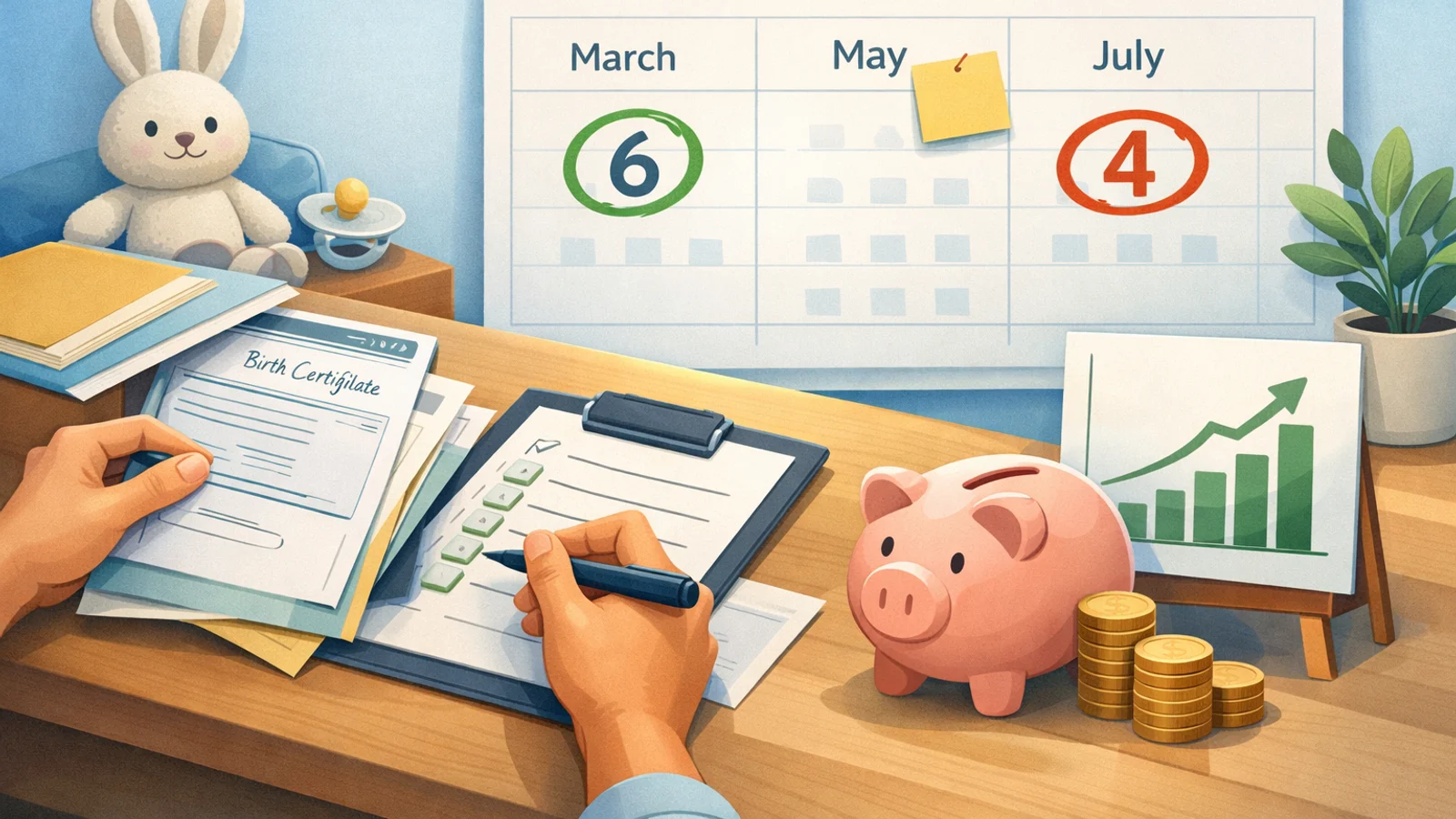
Current federal guidance says these new child accounts may be opened for eligible children, with activation notices expected around May 2026 and contributions not allowed before July 4, 2026. The IRS has also said the program includes a one-time $1,000 pilot contribution for eligible children when an election is made, generally for U.S. citizen children born from January 1, 2025 through December 31, 2028. (irs.gov)
For families following Kid Saving Account, that makes this a planning season more than a funding season.
What parents are asking right now
1. Can I put money in yet?
Not yet. Current IRS guidance says contributions cannot be made before July 4, 2026. That means parents who are eager to start should use spring 2026 to prepare documents, compare custodians if they become available, and decide how much they may want to contribute once funding opens. (irs.gov)
2. Which children may qualify for the federal starter deposit?
Public guidance says the federal pilot deposit applies to an eligible child who is a U.S. citizen and is born on or after January 1, 2025 and before January 1, 2029, if the required election is made. The account rules generally apply to children who have not turned 18 before the end of the calendar year the election is made. (irs.gov)
3. How much can family contribute?
The current public materials say parents and others may contribute up to $5,000 per year initially, and employer contributions of up to $2,500 per year may be permitted under the rules described by the White House and IRS guidance. Families should still watch for final implementation details from custodians and Treasury before acting. (whitehouse.gov)
4. Do I need to do something now?
Probably yes, but mainly administrative steps:
- confirm your child’s legal name matches Social Security records
- make sure your child has a Social Security number
- save proof of birth and citizenship status where relevant
- watch for activation or enrollment notices around May 2026
- decide who in the family may contribute after July 4, 2026
This matters because tax and child-related programs often run into delays when a child’s SSN or identifying information is missing or inconsistent. The National Taxpayer Advocate has flagged SSN timing as a real issue for families claiming child-related benefits. (taxpayeradvocate.irs.gov)
A practical Kid Saving Account checklist for spring 2026
If you want to be ready without overcomplicating it, use this simple plan.
Step 1: Gather the core records
Create one folder, paper or digital, with:
- birth certificate
- Social Security card or confirmation
- parent or guardian identification
- current mailing address
- payroll contact details if your employer may eventually offer contributions
Step 2: Set a contribution target now
Even though money cannot go in before July 4, 2026, you can still choose a realistic starting number now.
Good examples:
- $25 per month if you want a low-friction habit
- $100 at birthdays and holidays if relatives want to help
- a larger one-time summer contribution after the July 4 opening date
Step 3: Decide who will help fund it
Current guidance indicates contributions may come from parents, family, friends, and employers, subject to the program rules. That means it is worth talking now with grandparents or other supporters so everyone understands the timing and limits. (whitehouse.gov)
Step 4: Avoid one common mistake
Do not treat Kid Saving Account planning as a guarantee of tax savings, investment returns, or automatic enrollment. The public framework is real, but the practical details still depend on implementation, elections, and account availability through participating providers. That is why the safest move in March 2026 is preparation, not assumption. (irs.gov)
What is actually new in 2026?
The biggest 2026 development is that the rules moved from political discussion into published federal guidance. In December 2025, the IRS and Treasury released guidance describing how these accounts are expected to work, including the no-contributions-before-July-4-2026 rule and the $1,000 pilot contribution for eligible children. That gives parents something concrete to plan around in 2026 instead of guessing from campaign language or headlines. (irs.gov)
A second important update is timing. Families tracking Kid Saving Account should anchor on two dates:
- around May 2026: watch for activation or enrollment-related notices
- July 4, 2026: earliest date contributions may begin
Those dates are the most useful planning markers for parents right now. The exact account-opening process may vary as more operational details are released. (irs.gov)
What Kid Saving Account families should do next
If your child may be eligible, your best next move is simple:
- verify your child’s records
- watch for updates around May 2026
- make a family contribution plan before July 4, 2026
- keep expectations practical until live account options are confirmed
For most parents, this is not a rush-to-invest story yet. It is a get-ready story.
Kid Saving Account can help families stay organized and informed, but it is not a government agency and cannot promise eligibility, tax treatment, or account performance. For now, the smart move is to prepare carefully, mark the dates, and be ready to act when contributions officially open on July 4, 2026.