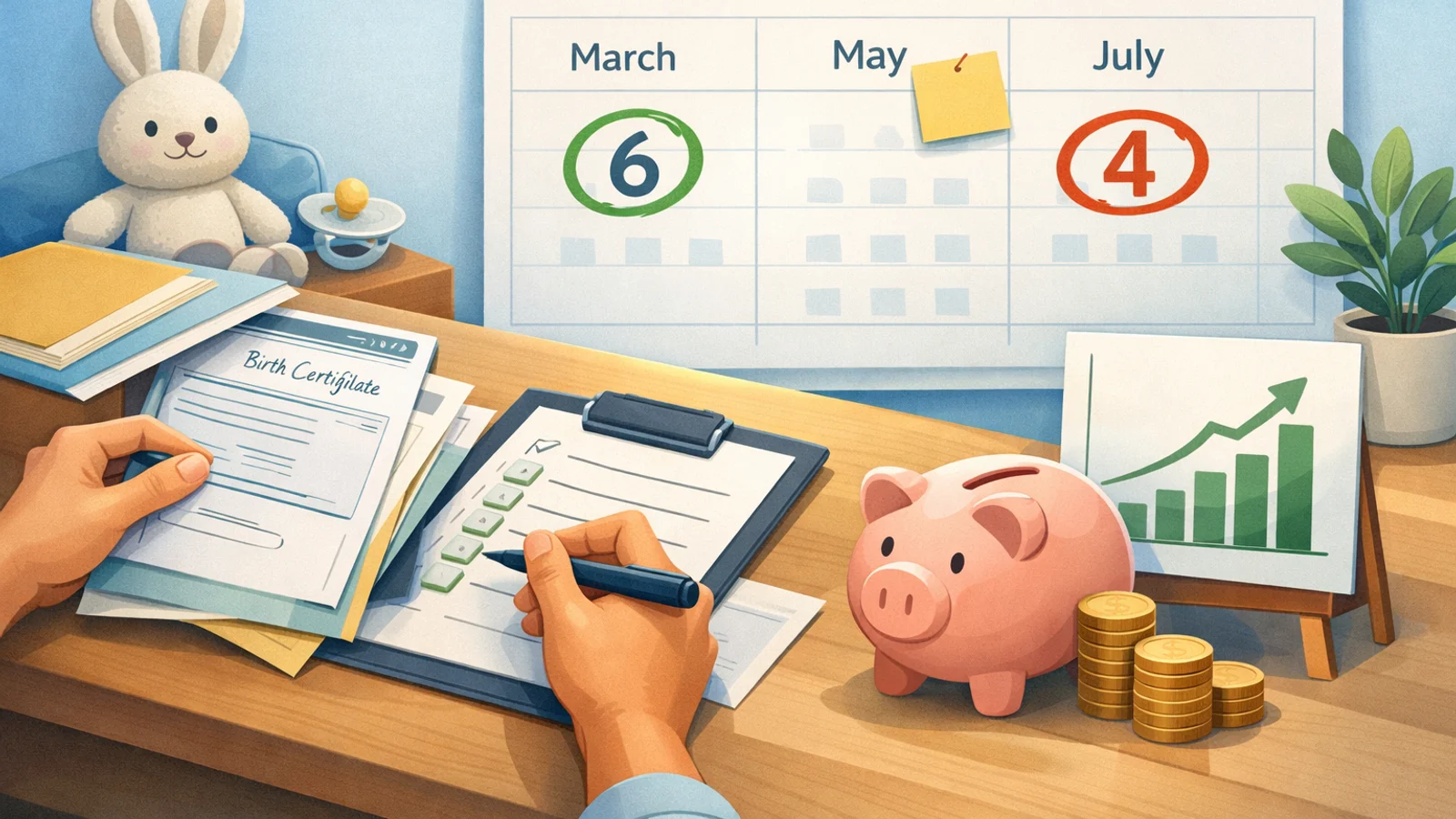
If you are a parent hearing about the 2026 child account rollout and wondering what actually matters now, here is the practical version: the biggest dates are around May 2026 for activation notices and July 4, 2026 for the first regular contributions. Public IRS guidance says contributions cannot be accepted before July 4, 2026, and recent Treasury and IRS updates explain that eligible children may receive a one-time $1,000 pilot-program contribution once the required election and account-opening steps are completed. (irs.gov)
What parents are asking right now
Most families are asking some version of the same questions:
- Do I need to do anything now, or is this automatic?
- Who is eligible for the initial government-funded contribution?
- When can I actually put money in?
- What paperwork or online steps should I expect?
- Should I wait for more details before making a plan?
The current public guidance suggests that parents should expect an election and activation process, not a fully hands-off setup. IRS instructions for Form 4547 say an authorized individual makes the election for an eligible child, and White House public guidance says that, after an election is made, activation information is expected to begin going out starting in May 2026 so the account can be authenticated and opened. (irs.gov)
The dates that matter in 2026
For planning, keep these dates separate:
- March 6, 2026: Treasury and IRS issued proposed regulations for the contribution pilot program. (irs.gov)
- Around May 2026: activation notices are expected to begin for families who have made the required election. (whitehouse.gov)
- July 4, 2026: regular contributions can begin; public IRS guidance says contributions cannot be accepted before this date. (irs.gov)
- No earlier than July 4, 2026: the one-time pilot-program deposit for eligible children will not be deposited before this date. (irs.gov)
That means a smart parent checklist for March 17, 2026 is mostly about getting organized, not trying to fund the account early.
What appears to be eligible right now
Based on current IRS materials, the pilot-program contribution is tied to children who meet specific conditions, including being born after December 31, 2024, and before January 1, 2029, being a U.S. citizen, having an SSN, and not having already had a prior pilot-program election processed for them. Recent IRS news also frames the eligible birth years as 2025, 2026, 2027, or 2028. (irs.gov)
Separately, IRS guidance says an account may generally be established for an eligible child who has not turned age 18 before the end of the calendar year in which the election is made, but the one-time $1,000 pilot-program contribution has the narrower birth-date rules above. (irs.gov)
What parents can do now
Here is the practical plan:
1. Confirm your child’s basic records
Make sure the child’s legal name, date of birth, citizenship status, and Social Security number records are accurate and available. Current IRS instructions explicitly reference SSN and qualifying-child requirements for the election process. (irs.gov)
2. Watch for the election and activation steps
The current public materials point parents to Form 4547 and indicate that an online option may become available in the middle of 2026. If you are expecting to participate, keep an eye out for official account-opening and activation instructions. (irs.gov)
3. Do not plan on contributing before July 4, 2026
If you are building your family budget now, schedule your first intended contribution for July 4, 2026 or later, not earlier. IRS guidance is clear on that point. (irs.gov)
4. Decide who may contribute
Current public guidance says contributions may come from parents or guardians, grandparents, family members, friends, and in some cases employers, subject to the applicable rules and limits. (irs.gov)
5. Set a contribution target before the launch date
Even if you start small, having a number ready helps. For some families that may be $25 or $50 per month starting in July 2026. For others, it may be a birthday-and-holidays strategy where relatives contribute instead of buying extra gifts. That planning suggestion is our practical take, based on the contribution timeline now in public guidance. (irs.gov)
Questions families should be asking before they start
Before you open or activate anything, ask:
- Is my child in the eligible age and birth-date window?
- Do I have the records needed to make the election?
- Who in our family will actually contribute?
- Are we planning one-time deposits, monthly deposits, or gift-based deposits?
- Do we want to wait for the official activation notice before choosing our first contribution amount?
These are not just paperwork questions. They help families avoid missing the first funding window once July 4, 2026 arrives. The public guidance so far suggests that timing and completed setup will matter. (irs.gov)
A simple March 2026 parent checklist
If you want a short action list for right now:
- Gather your child’s SSN and birth records.
- Watch for official election and activation instructions.
- Put May 2026 on your calendar for possible activation notices.
- Put July 4, 2026 on your calendar as the first date contributions can begin.
- Decide on a starting contribution amount.
- Tell grandparents or other supporters how you want gifts handled once contributions open.
Bottom line
For parents following this 2026 rollout, the main development is that the rules are becoming more concrete. The IRS and Treasury have already released guidance and proposed regulations, and the public timeline now points to activation around May 2026 and contributions starting July 4, 2026. For most families, the best next move is simple: get your records ready, follow the official setup process when it opens, and have a realistic contribution plan ready for July. (irs.gov)