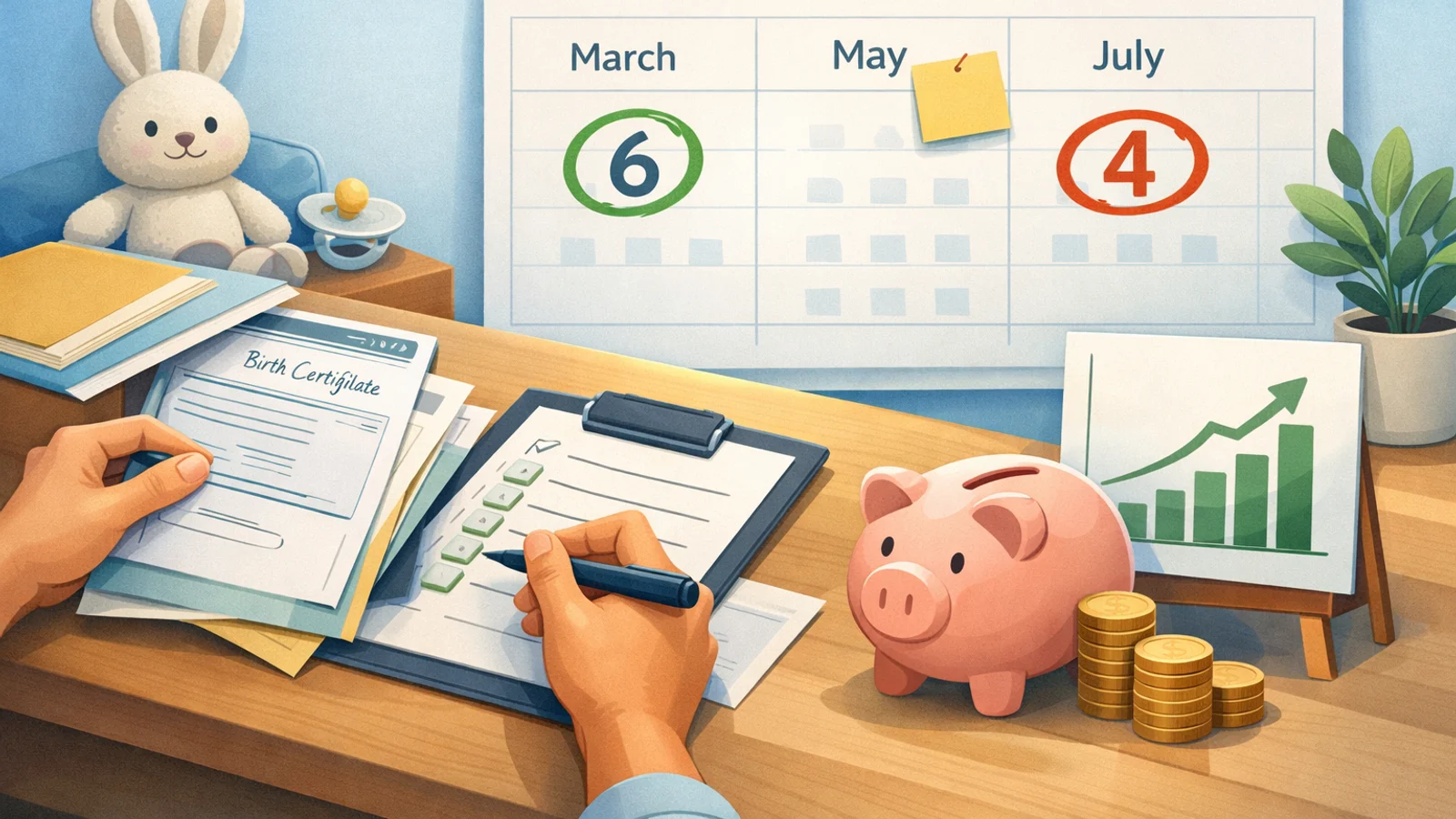
Parents are asking the same question in early 2026: where should we put money for a child right now, and what should we do first?
For Kid Saving Account readers, the practical answer is this: start with your goal, not the product. The best next step depends on whether you are saving for short-term flexibility, college, or a long-term starter fund tied to the new 2026 federal rollout.
A major new development is that the IRS and Treasury said last week that proposed regulations are now out for the new Trump Accounts contribution pilot program created by the July 4, 2025 law. According to the IRS, eligible children include those born in calendar years 2025, 2026, 2027, or 2028, and a new Form 4547 is intended to be used to establish the account election. (irs.gov)
For families following Kid Saving Account planning timelines, keep the dates concrete: activation notices are expected around May 2026, and contributions are expected to start July 4, 2026. That means most parents should use spring 2026 to get organized, compare options, and decide what role this new account should play alongside existing savings tools.
The 3 questions parents are asking right now
1) Should we wait for the new 2026 account rollout?
Usually, no. If your child already has gifts coming in, or you want to build a saving habit now, it often makes sense to start with the account type you can open and fund today, then decide later how the 2026 rollout fits into your full plan.
The reason: the federal pilot is new, the rulemaking is still in the proposed stage, and operational details are still being clarified by Treasury and the IRS. (irs.gov)
2) Is a 529 still worth it in 2026?
For many families, yes. A 529 remains one of the clearest purpose-built options for education savings. For Colorado families using CollegeInvest, the state says the 2026 tax-year deduction cap is $26,200 per taxpayer per beneficiary for single filers and $39,200 per taxpayer per beneficiary for joint filers. (collegeinvest.org)
That does not make a 529 the right answer for every family. It does mean parents who expect education costs should still compare a 529 before defaulting to a plain savings account.
3) What about U.S. savings bonds for kids?
They are still part of the conversation in 2026 because they are simple, government-backed, and easy for gift-givers to understand. TreasuryDirect says new Series EE bonds issued from November 1, 2025 through April 30, 2026 earn 2.50%, and Treasury also announced that Series I bonds issued in that same window earn a 4.03% composite rate, including a 0.90% fixed rate. (treasurydirect.gov)
TreasuryDirect also says electronic savings bonds can be bought for a child through a linked minor account, and annual purchase limits apply. (treasurydirect.gov)
A simple way to compare your options
Here is the plain-English version many parents need:
- Plain savings account: best for flexibility and near-term use, but often weaker long-term growth.
- 529 plan: best when education is a real goal and you want tax advantages tied to that purpose.
- Savings bonds: best for simple gifting, conservative saving, and families who want a low-drama option.
- New 2026 federal child account rollout: worth watching if your child may qualify, but not a reason to pause every other savings step until summer.
What to do between now and July 4, 2026
If you want a practical Kid Saving Account checklist, use this:
-
Pick the goal. Decide whether this money is for emergencies, education, adulthood, or a mix.
-
List the possible contributors. Parents, grandparents, and family friends often want to help, but they need clear instructions.
-
Choose one starter account now. If you are stuck, choose the simplest account you will actually fund this month.
-
Create a summer 2026 review date. Put July 4, 2026 on your calendar to review whether the new federal contribution option changes your plan.
-
Keep records of gifts and deposits. This matters more if multiple adults are contributing.
One tax rule parents should know before relatives give money
If grandparents or other relatives want to contribute heavily, 529 rules can intersect with gift-tax rules. IRS materials for 2025 filings describe the special 5-year election for larger 529 contributions and show that up to $95,000 can be spread ratably over five years for one beneficiary for 2025 gifts. The IRS also notes the 2026 annual exclusion amount in current estate-and-gift-tax updates. (irs.gov)
That does not mean most families will owe gift tax. It does mean larger gifts should be tracked carefully and reviewed with a tax professional.
The bottom line for parents in March 2026
The biggest mistake right now is waiting for a perfect answer. The better move is to start a workable system now, then adjust when the 2026 rollout becomes more concrete.
For most families, the practical order is:
- open or fund the simplest account you can use now,
- compare that with a 529 if education is a likely goal,
- consider savings bonds for conservative gifting,
- and revisit everything when activation notices arrive around May 2026 and contributions are expected to begin July 4, 2026.
Kid Saving Account is a planning resource, not a government agency, bank, or tax authority. Parents should verify account eligibility, tax treatment, and contribution rules before making major decisions.