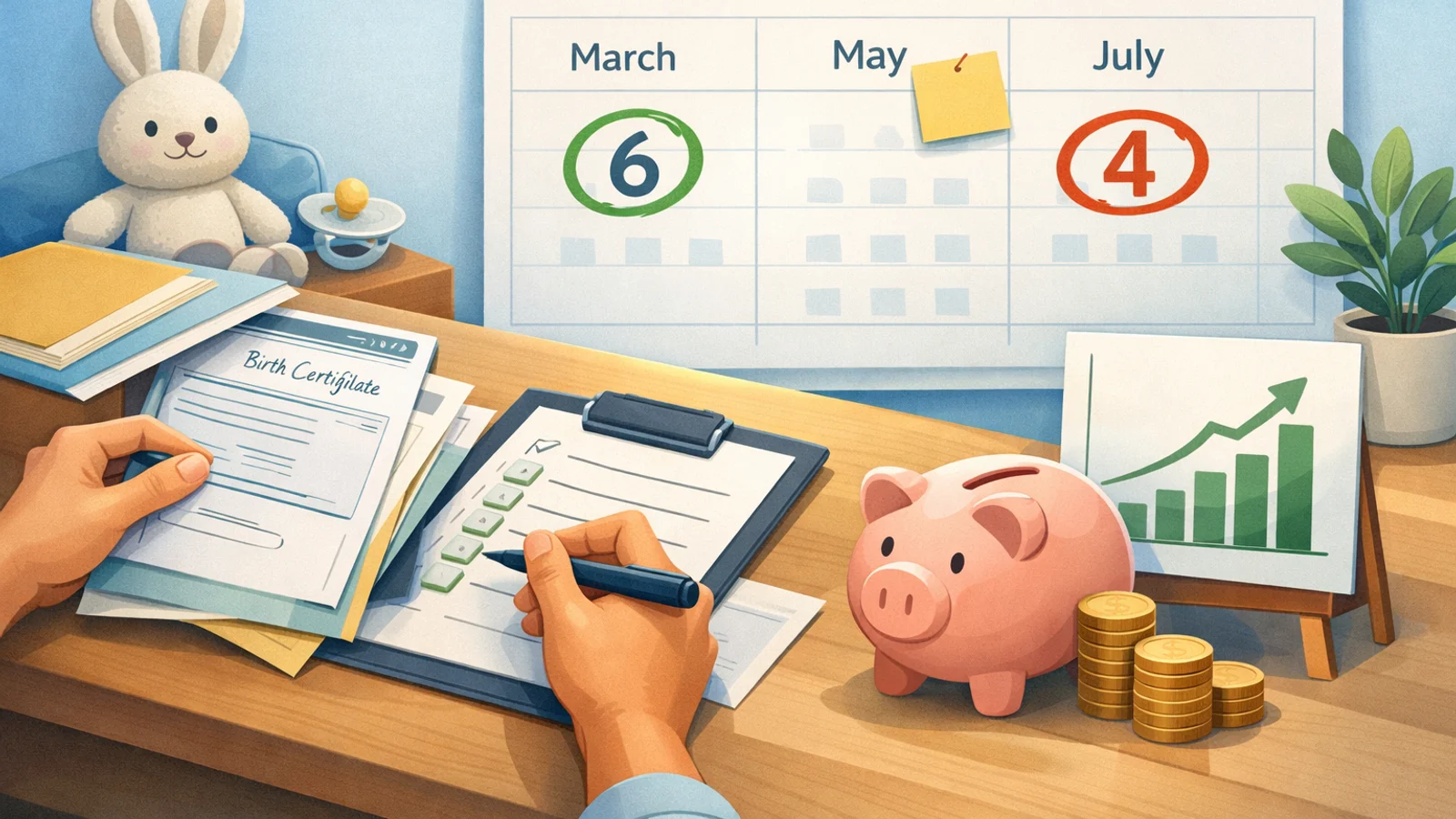
What parents should know about Kid Saving Account in March 2026
If you have been hearing about new child savings accounts and trying to sort out what is real, what is changing, and what you should do next, you are not alone.
As of March 18, 2026, the biggest public update is that the Treasury Department and IRS have issued proposed regulations for the new federal child account pilot contribution process. The current public guidance says eligible children may receive a one-time $1,000 government contribution if the required election is made, and that regular contributions cannot start before July 4, 2026. (irs.gov)
For parents, that means this is still a planning window, not a rush-to-fund window. Kid Saving Account can help families organize questions, documents, and next steps, but it is not a government agency and does not make official eligibility decisions.
The short version
Here is the practical summary based on current public information:
- The law creating these accounts was signed on July 4, 2025. (irs.gov)
- Treasury and IRS announced proposed regulations on March 6, 2026. (irs.gov)
- Public IRS guidance says the government’s $1,000 pilot contribution is tied to an election for an eligible child. (irs.gov)
- IRS guidance also says accounts cannot accept contributions before July 4, 2026. (irs.gov)
- IRS bulletin guidance indicates a pilot-program deposit for an eligible child would be made no earlier than July 4, 2026. (irs.gov)
- IRS materials say Form 4547 is expected to be used for the election process for calendar year 2026, once released. (irs.gov)
The questions parents are asking right now
1) Do I need to open something now?
Probably not in the sense of making a contribution immediately. The current IRS guidance says funding cannot begin before July 4, 2026, so most families are better off using spring 2026 to confirm eligibility details, watch for official forms and instructions, and choose how they want to keep records. (irs.gov)
2) When should I expect action?
A practical timeline is:
- March 2026: proposed regulations are out. (irs.gov)
- Around May 2026: many families are expecting clearer activation steps, notices, forms, or account-opening workflows, though parents should treat this as an expected rollout period rather than a guaranteed personal deadline. This timing aligns with the current 2026 rollout discussion in public-facing materials and planning expectations around the summer start date. (irs.gov)
- July 4, 2026: contributions may begin, and pilot-program deposits are described as occurring no earlier than this date. (irs.gov)
3) Which children may qualify for the $1,000 contribution?
Current public materials say the parent or guardian of a child born between calendar years 2025 and 2028, who is a U.S. citizen with a valid Social Security number, may choose to have the one-time $1,000 Treasury contribution made, subject to the official rules and election process. Parents should rely on final IRS/Treasury instructions for the controlling requirements. (whitehouse.gov)
4) Is this the same as a 529 plan?
No. The IRS describes these as a new type of traditional individual retirement account for eligible minors, which makes them different from 529 college savings plans. That difference matters because contribution rules, tax treatment, use cases, and paperwork are not the same. (irs.gov)
A simple parent planning checklist for spring 2026
Between now and July 4, 2026, focus on preparation instead of speed.
Step 1: Confirm your child’s basic records
Have these ready:
- full legal name
- date of birth
- Social Security number
- parent or guardian information
- current mailing address
- copies of any records you may need if an election form asks for verification
Step 2: Watch for official release items
Parents should keep an eye out for:
- final or updated IRS guidance
- release of Form 4547 and instructions
- any Treasury or IRS online election tool mentioned in bulletin guidance
- provider-specific account setup procedures
The IRS bulletin says the election may be made on Form 4547, once released, and may also be available through an online tool or application. (irs.gov)
Step 3: Decide how much you may want to contribute later
You do not need to finalize everything today, but it helps to sketch out a starting plan now:
- $25 per month
- $50 per month
- birthday-only gifts
- grandparent contributions
- employer-related contributions if available and appropriate
White House materials discussing the program say children, parents, grandparents, family members, friends, and employers may contribute, with certain employer contribution rules described separately. Parents should wait for official provider and tax guidance before relying on any specific tax outcome. (whitehouse.gov)
Step 4: Keep your expectations realistic
This is still a rollout. Proposed regulations are a meaningful update, but parents should expect additional details, operational steps, and provider processes between now and summer 2026. (irs.gov)
Kid Saving Account vs. waiting until summer
For many families, the real comparison right now is not between two account products. It is between:
- waiting passively, or
- getting organized before the July 4, 2026 start date.
A practical tool like Kid Saving Account is most useful if it helps you:
- track your child’s eligibility-related details
- save rollout dates in one place
- prepare documents early
- decide on a contribution amount in advance
- avoid scrambling when official forms go live
That is especially helpful for parents with a newborn, multiple children, shared guardianship logistics, or relatives who want to help contribute later.
Common mistakes to avoid
Assuming money can go in now
Current IRS guidance says no contributions before July 4, 2026. (irs.gov)
Assuming every child automatically gets the $1,000
The current guidance describes an election process for an eligible child. That means families should not assume the contribution is automatic without completing the required steps. (irs.gov)
Assuming proposed guidance is the final word
The March 6, 2026 announcement involves proposed regulations, so parents should continue checking for updates before making decisions based on edge-case eligibility or tax treatment. (irs.gov)
Mixing this up with other savings accounts
This program has its own structure and dates. Do not assume the rules match a checking account, custodial brokerage account, or 529 plan. (irs.gov)
A practical timeline for parents
If you want a simple timeline to follow, use this:
Now through April 2026
- gather child and parent records
- review current public guidance
- avoid assuming you can fund the account yet
Around May 2026
- look for activation notices, forms, or setup instructions
- check whether Form 4547 or an online election tool has been released
- decide who in the family will handle the election and account records
Starting July 4, 2026
- contributions may begin
- eligible children’s pilot-program deposits are expected no earlier than this date
- save confirmations, forms, and statements carefully
This date-based approach matches the current IRS and Treasury public guidance better than reacting to headlines alone. (irs.gov)
Bottom line
For parents in March 2026, the main development is not that you need to rush money into an account today. It is that the rules and process are becoming clearer ahead of the July 4, 2026 funding start.
The best next move is simple: get organized, watch for official activation materials around May 2026, and be ready to act once contributions open on July 4, 2026. Kid Saving Account can support that planning process, but parents should still rely on official IRS and Treasury guidance for final instructions, eligibility, and forms. (irs.gov)