Parents have a new 2026 planning question: should you do anything now for a Kid Saving Account, or wait until the program is fully live?
The short answer is: there are a few useful steps to take now, but the money part does not start until July 4, 2026. If you are hearing mixed advice online, that is normal. Public guidance has rolled out in stages, and many parents are still sorting out what happens at tax filing, what happens in May 2026, and what actually starts on July 4, 2026. (irs.gov)
What parents are asking right now
As of Wednesday, March 18, 2026, the biggest parent questions are usually these:
- Is there a form to elect the account?
- Do I need to finish something during tax season?
- When do activation notices go out?
- When can family money actually be contributed?
- Is this the same as a 529 plan or a regular savings account?
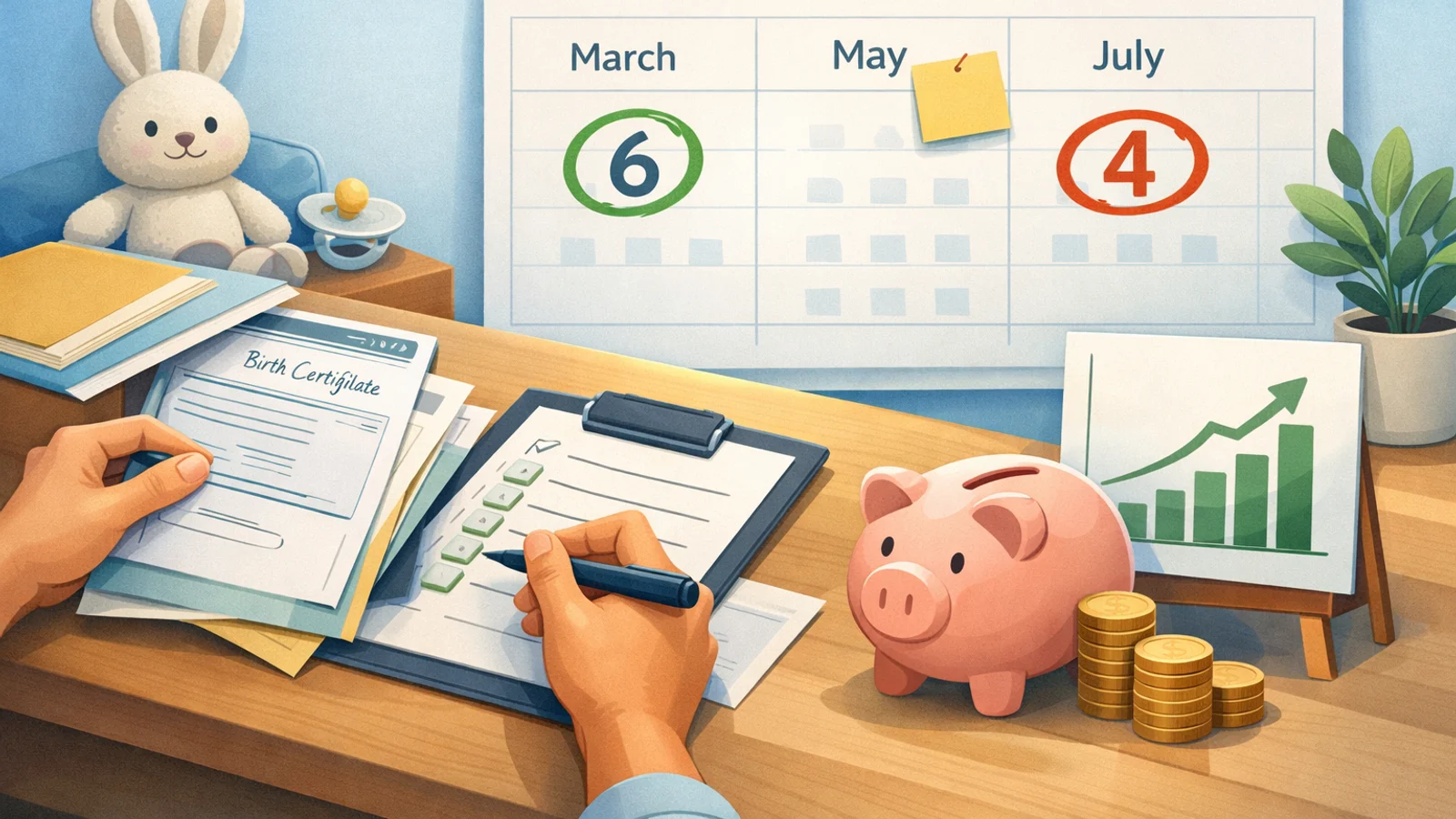
Current public IRS and Treasury guidance points to a phased rollout. Families can make an election through IRS Form 4547 or, in some cases, through the official program website workflow. Then, beginning around May 2026, Treasury or its agent is expected to send activation information. Actual contributions, including the initial government deposit for eligible children, are not scheduled before July 4, 2026. (irs.gov)
The 2026 timeline in plain English
Here is the practical version of the timeline parents should use:
- Now through tax filing season: review whether your child appears eligible and whether you want to make the election tied to the program setup process.
- Around May 2026: watch for activation instructions and identity-verification steps.
- Starting July 4, 2026: contributions can begin, subject to program rules. That is also when the initial pilot funding for eligible children is expected to start being deposited. (whitehouse.gov)
That means a parent who files paperwork in March 2026 should not expect money to land right away. The activation step and the funding step are separate. (whitehouse.gov)
What to do now if you want to be ready
A practical Kid Saving Account checklist for March 2026:
1. Confirm the child’s identifying information
Make sure you have the child’s legal name, date of birth, and taxpayer identification details exactly as used on tax records. IRS materials indicate these accounts are administered through tax and Treasury systems, so mismatched information can create delays. (irs.gov)
2. Ask your tax preparer about Form 4547
If you are filing a 2025 return in 2026, ask whether your software or preparer supports Form 4547 and whether your child appears eligible for an election. The IRS has publicly identified Form 4547 as the election form connected to the program. (irs.gov)
3. Be cautious with unofficial explanations
A lot of parent confusion is coming from summaries, social posts, and promotional websites. For the rollout calendar, rely most heavily on IRS, Treasury, and the official program site. Current official public information says activation details are expected beginning in May 2026, with contributions starting July 4, 2026. (irs.gov)
4. Decide how this fits with your other savings accounts
For many families, this is not an “either/or” choice. A Kid Saving Account may end up being one layer of a broader child savings plan alongside emergency savings, a 529, or other family goals. The account rules are different from a regular bank savings account, and they are also different from a standard education-only account. (irs.gov)
5. Set expectations with grandparents or other helpers
If relatives want to help, tell them not to send money yet unless and until the contribution window actually opens. Under current guidance, contributions are not accepted before July 4, 2026. (whitehouse.gov)
Common points of confusion
“If I file now, is the account fully open?”
Not necessarily. Public guidance indicates that filing or making the election is only part of the process. Activation information is expected later, around May 2026. (whitehouse.gov)
“Can I contribute before July 4, 2026?”
Based on current IRS and Treasury guidance, no. Contributions are not supposed to begin before July 4, 2026. (irs.gov)
“Is this guaranteed free money?”
Parents should be careful with that wording. Public guidance describes a pilot contribution structure for eligible children, but eligibility, setup, identity verification, and administrative rules still matter. It is better to think of this as a program with specific requirements rather than as an automatic payout. (irs.gov)
“Should I stop using a 529?”
For most families, that is too big a jump based on today’s information alone. A 529 and a child-focused savings program can serve different goals. If you already use a 529, compare purpose, flexibility, contribution plans, and timing before making changes. This is planning, not a one-account-fits-all decision. (braverman-law.com)
A simple planning approach for parents
If you want a low-stress approach, use this three-step plan:
- Handle the election step during tax season if your child is eligible.
- Watch closely for activation notices around May 2026.
- Make your first contribution plan for July 4, 2026 or later, not before. (whitehouse.gov)
For many households, that is enough for now. You do not need to overbuild a strategy in March if the contribution window does not open until July.
Bottom line
For parents following Kid Saving Account news in March 2026, the main update is this: the setup process and the funding process are on different dates. Activation notices are expected around May 2026, and contributions are expected to begin July 4, 2026. That makes this a good time to organize records, ask your tax preparer the right questions, and ignore rushed advice that suggests money can be added immediately. (whitehouse.gov)
Kid Saving Account can help parents stay organized and practical as this rollout develops, but families should still verify details through official program and tax guidance before acting.