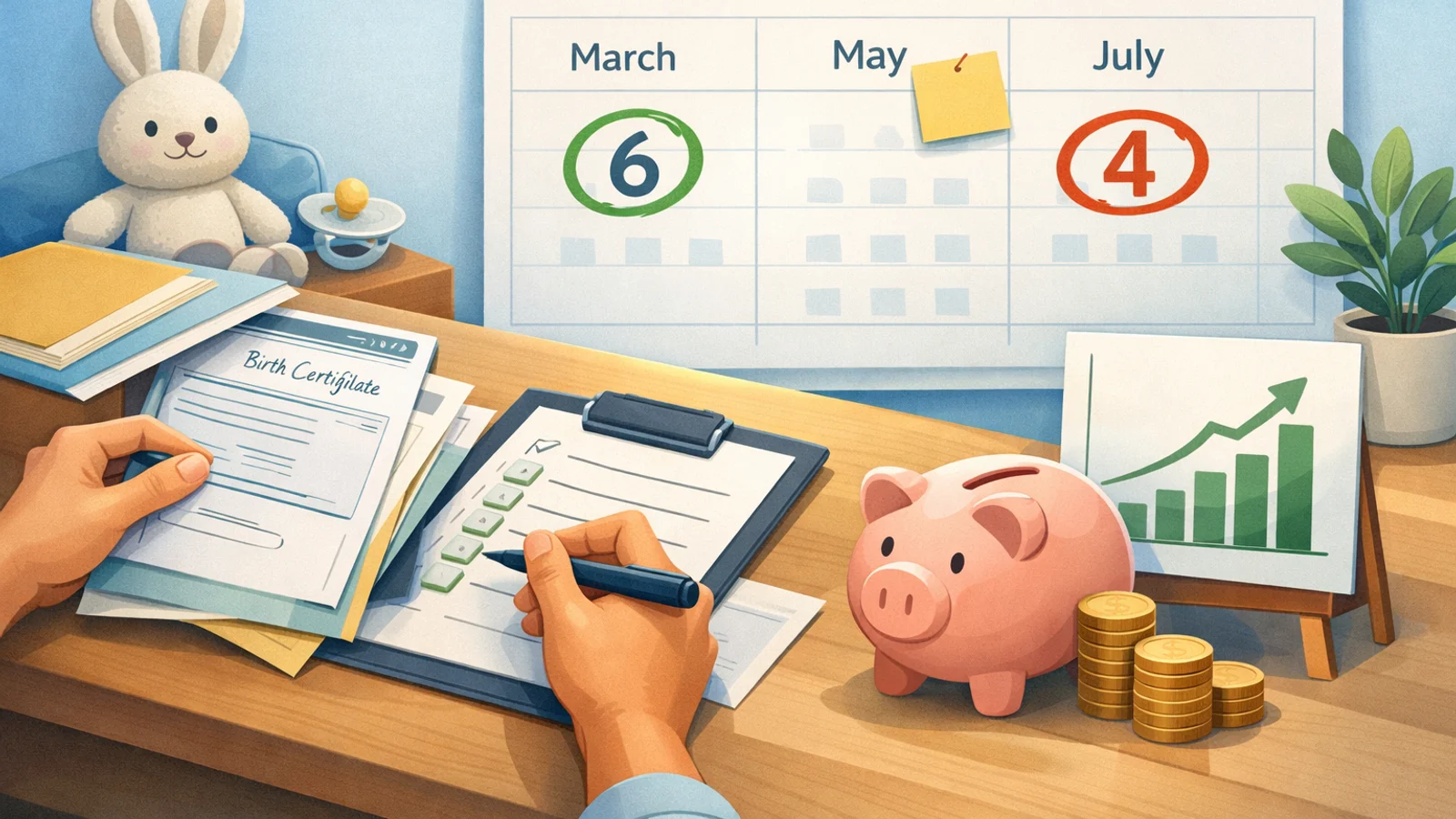
Parents have a new reason to pay attention to child saving options in 2026. A new federal program commonly called Trump Accounts is moving from law to rollout, and many families are trying to sort out three practical questions: Does my child qualify? What happens in May 2026? And what should I do before contributions begin on July 4, 2026? The law creating these accounts was signed on July 4, 2025, and the IRS said proposed rules for the pilot contribution program were issued in March 2026. (irs.gov)
The short version for parents
Here is the current public picture as of March 19, 2026:
- Parents or guardians can establish these accounts for eligible children. (irs.gov)
- A child may qualify for a one-time $1,000 Treasury contribution if the child is a U.S. citizen with a valid Social Security number and was born in calendar years 2025, 2026, 2027, or 2028. (irs.gov)
- Public reporting says families who sign up should expect activation information around May 2026. (apnews.com)
- Contributions are expected to start on July 4, 2026. (whitehouse.gov)
- Annual family contribution limits have been described publicly as $5,000 per year initially, with separate rules for some employer contributions. (whitehouse.gov)
Why this matters to Kid Saving Account families
Kid Saving Account is not a government agency, and this article is not official tax or legal guidance. But for parents comparing saving options, this rollout matters because it changes the question from “Should I save for my child?” to “How should I organize child savings across more than one account type?” (congress.gov)
For many families, the practical comparison in 2026 is no longer just savings account vs. 529 plan. It may now be:
- a regular kids savings account for short-term goals,
- a 529 for education-focused savings,
- and this new federal child investment account for long-term wealth building if the child is eligible. (cnbc.com)
The biggest parent questions right now
1) Does my child qualify for the $1,000?
Based on current IRS and White House materials, the clearest public rule is that the child must be:
- born in 2025, 2026, 2027, or 2028,
- a U.S. citizen,
- and have a valid Social Security number. (irs.gov)
Current reporting also says the parent must make an election or complete the signup process for the Treasury contribution to be made. In other words, parents should not assume the $1,000 appears automatically without action. (irs.gov)
2) What is supposed to happen in May 2026?
The practical milestone is activation. AP reported that families who sign up will receive information in May 2026 about how to finish opening the accounts, and the IRS draft form also references account activation information beginning in May 2026. (apnews.com)
That means May is likely the month when many parents move from “I registered interest” to “I completed the account setup.” That is an inference from the IRS draft form and current reporting, not a guarantee of your exact timeline. (apnews.com)
3) When can money actually go in?
The current public answer is July 4, 2026. White House and news reporting both say contributions will be accepted starting on that date. (whitehouse.gov)
If you are planning gifts from grandparents, payroll help from an employer, or a first family contribution, July 4, 2026 is the date to keep on your calendar. (whitehouse.gov)
4) Is this a replacement for a kids savings account or 529?
Usually, no. The better way to think about it is job-based saving:
- Kids savings account: cash for near-term needs, simple access, emergency flexibility.
- 529 plan: education-first savings with tax advantages tied to qualified uses.
- New federal child investment account: long-term investing with age-based restrictions and specific legal rules. (cnbc.com)
For parents, that means the new account may be one part of the plan, not the whole plan.
A practical planning checklist for spring and summer 2026
If you want to stay organized, here is a simple sequence:
Before May 2026
- Confirm your child’s date of birth and Social Security number records.
- Watch for IRS or account setup instructions tied to the child’s eligibility year. (irs.gov)
- Decide whether you want this account to be part of your long-term plan alongside your existing savings setup.
Around May 2026
- Look for the expected activation notice or follow-up instructions. (apnews.com)
- Complete any remaining setup steps promptly.
- Save copies of forms, confirmations, and account details.
Before July 4, 2026
- Decide who may contribute first: parent, grandparent, friend, or employer.
- Set a family rule for gifts: birthdays, holidays, or monthly auto-contributions.
- Avoid promising yourself a contribution amount you cannot sustain.
Starting July 4, 2026
- Make the first planned contribution if the account is active. (whitehouse.gov)
- Track deposits carefully.
- Review whether your child also needs separate short-term savings and education savings.
What parents should be careful about
A few cautions matter here:
- Do not confuse announcement with activation. The public timeline points to May 2026 for activation-related information and July 4, 2026 for contributions. (apnews.com)
- Do not assume every child gets the $1,000 automatically. Current IRS guidance says an election process is involved. (irs.gov)
- Do not assume this is the best place for every dollar. Families still need liquidity, emergency savings, and sometimes education-specific planning. That is a planning judgment, not a guarantee. (cnbc.com)
The bottom line for March 2026
For parents following Kid Saving Account, the most timely development is straightforward: the new child account program has moved from headline to implementation. The dates to remember are May 2026 for expected activation-related notices and July 4, 2026 for the start of contributions. Eligible children born from 2025 through 2028 may qualify for the one-time $1,000 Treasury contribution if the required setup steps are completed. (irs.gov)
The smartest move now is not to wait for the news cycle to simplify it. It is to build a clear family plan: know whether your child is eligible, watch for the May 2026 activation step, and decide how this account fits with your regular child savings and education savings strategy. (apnews.com)