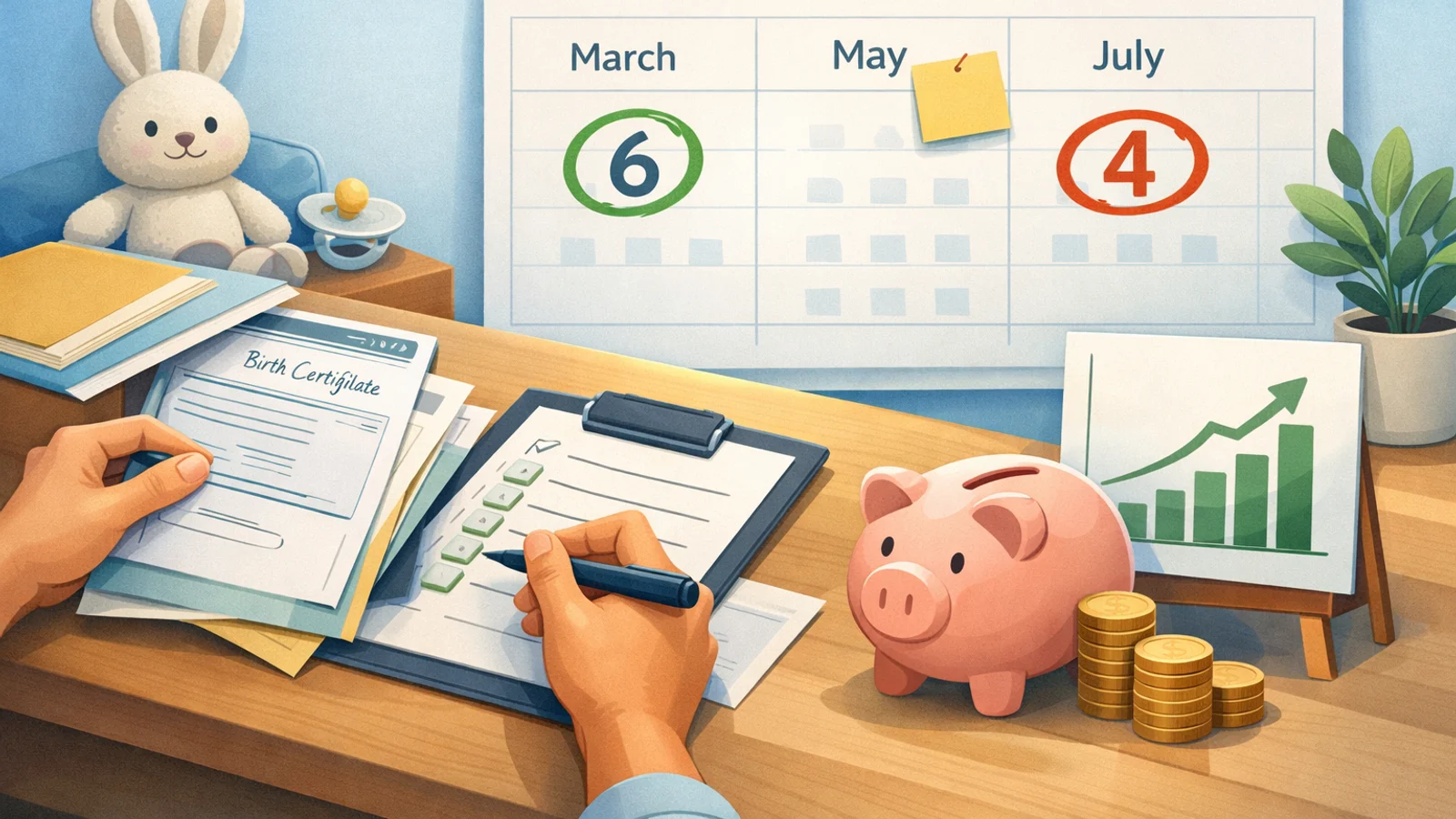
Parents have a lot of questions right now about Kid Saving Account options, especially as the 2026 rollout gets closer. The biggest timing point is simple: activation notices are expected around May 2026, and account contributions are not expected to begin until July 4, 2026. Public IRS and Treasury materials for this new federal child account framework say accounts cannot accept funding before July 4, 2026, and describe a one-time $1,000 government pilot contribution for eligible children when the required election is made. (irs.gov)
What parents are asking in March 2026
Here are the most common practical questions parents are asking right now:
- Do I need to open something today? Usually, no. March 19, 2026 is still in the planning window for most families.
- When will I hear something official? Current IRS draft and related public guidance point to May 2026 for activation-related notices. (irs.gov)
- When can money actually go in? Not before July 4, 2026. (irs.gov)
- Who appears eligible for the federal starter deposit? Current IRS and Treasury materials describe eligibility for children born between January 1, 2025 and December 31, 2028, subject to the required election and program rules. (irs.gov)
- How much can family contribute each year once contributions begin? Current public materials describe up to $5,000 per year in contributions during the early framework. (whitehouse.gov)
What seems settled right now
Based on current IRS, Treasury, and White House materials, a few points look fairly clear as of March 19, 2026:
- This is still a rollout period. Families should expect more operational details between now and summer 2026. (irs.gov)
- Activation and funding are different steps. A parent may need to complete an election or activation process before any federal pilot contribution is made. (irs.gov)
- Funding starts later than many parents assume. Even if account setup happens earlier, contributions are not supposed to start before July 4, 2026. (irs.gov)
- The program language in federal sources is evolving. That means parents should expect forms, notices, and custodial options to become clearer closer to the launch window. This is an inference from the presence of proposed regulations, draft forms, and recent agency updates. (irs.gov)
A simple family plan for the next 90 days
If you want to be ready without overcomplicating things, use this checklist:
1) Gather the basics now
Have these ready in one folder:
- Child’s full legal name
- Date of birth
- Social Security number, if already issued
- Parent or guardian tax filing details
- Current mailing address
- A short record of which adult plans to handle the account
This should make it easier to respond quickly when activation instructions arrive around May 2026. The IRS has already said an election is required for eligible children in the pilot framework. (irs.gov)
2) Set your own contribution target before July
Even though contributions cannot begin until July 4, 2026, this is a good time to decide what your family can realistically afford.
Practical options:
- $10 to $25 a week if you want a low-friction habit
- $50 to $100 a month if you prefer one transfer
- Gift-based saving using birthdays or holidays
- Grandparent support if relatives want to help instead of buying more toys
The key is not maximizing on day one. The key is setting a contribution level you can actually maintain after July 4, 2026.
3) Watch for provider and account administration details
Treasury has publicly described these accounts as invested in an index fund, and recent Treasury statements also point to growing private-sector interest around the program. Still, parents should wait for final account-provider mechanics before making assumptions about setup steps, online access, or contribution workflows. (home.treasury.gov)
4) Keep expectations realistic
A Kid Saving Account can be a useful starting tool, but it is not a shortcut to guaranteed wealth, guaranteed college coverage, or guaranteed tax outcomes. Families should treat this as one piece of a broader saving plan and review tax or legal questions with a qualified professional.
New development parents should know
The most important recent development is that the IRS released proposed regulations last week for the contribution pilot program and said Treasury will make a one-time $1,000 deposit into the account of each eligible child under the program rules. That makes this feel much more operational than it did a few months ago, even though families are still waiting on the full activation process. (irs.gov)
A separate IRS summary page published last week also states that:
- parents, guardians, or others can establish an account for an eligible child,
- accounts cannot be funded before July 4, 2026, and
- the federal government will make a one-time $1,000 contribution for each eligible child’s account. (irs.gov)
The best move for parents today
As of Thursday, March 19, 2026, the best move is to prepare, not rush.
If your child may qualify, a smart next step is to:
- organize your child’s records now,
- watch for activation instructions around May 2026,
- choose a realistic monthly contribution amount before July 4, 2026, and
- wait for final account setup details instead of guessing.
That approach keeps your family ready without locking you into assumptions that could change as the 2026 rollout becomes more concrete. (irs.gov)