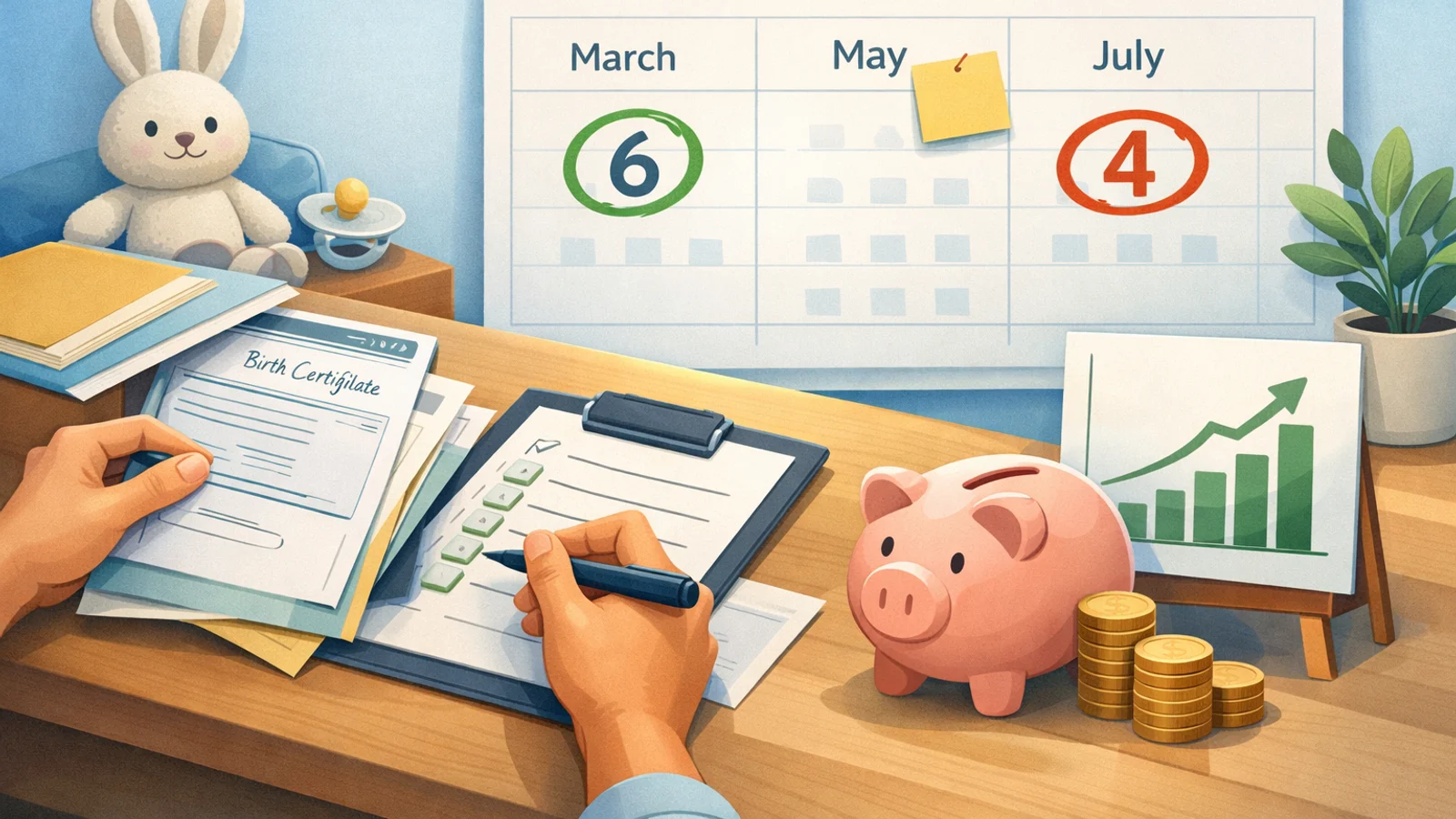
Parents have a lot of questions right now about the 2026 child account rollout behind the Kid Saving Account topic. The biggest reason is timing: the rules are real, but the money flow is not immediate. As of March 17, 2026, the IRS and Treasury have already issued guidance and proposed regulations for these new accounts, while family and employer contributions still cannot begin before July 4, 2026. Parents who want to be ready should focus first on eligibility, paperwork, account setup, and avoiding timeline mistakes. (irs.gov)
What parents are asking right now
1) “Can I put money in my child’s account today?”
No. Under current IRS guidance, contributions cannot be made before July 4, 2026. That includes regular family funding, and the Treasury pilot deposit for eligible children also will not land earlier than that date. If you are planning around birthdays, baby gifts, or tax-season decisions, that date matters. (irs.gov)
2) “Is there a government starter deposit?”
Yes, but only for children who meet the eligibility rules and for whom a proper election is made. Treasury and the IRS say the program includes a one-time $1,000 pilot contribution for each eligible child, and the parent or other authorized person must elect both the contribution and the account setup. (irs.gov)
3) “Which children appear eligible?”
Current IRS and Treasury materials say the pilot contribution generally applies to a child who is a U.S. citizen, has an SSN, and is born after December 31, 2024, and before January 1, 2029. Parents should still review the final operational details when they file or register, because eligibility depends on the election being made correctly. (irs.gov)
4) “Do I need to wait for a notice?”
Probably not forever, but parents should expect a phased process. IRS instructions say elections are made on Form 4547, and those same instructions indicate that online processing may begin in the middle of 2026 through the public program site referenced by the IRS. That means many families will likely move in stages: first confirm eligibility, then open or elect the account, then wait for contribution timing to catch up after July 4, 2026. (irs.gov)
The practical timeline for 2026
For parents following Kid Saving Account coverage, the cleanest way to think about the rollout is this:
- Now through spring 2026: review eligibility and gather documents.
- Around May 2026: watch for activation notices, operational updates, and clearer account-opening instructions.
- Middle of 2026: the IRS says online election capability may begin.
- Starting July 4, 2026: contributions may begin, and Treasury pilot deposits for eligible children cannot arrive before this date. (irs.gov)
That timeline helps explain why many parents feel like the program is both “open” and “not open yet.” In practice, setup activity may happen before funding activity. That is the key planning point. (irs.gov)
What to do now if you want to be ready
Gather the basics
Have these ready:
- Your child’s legal name
- Social Security number
- Date of birth
- Your own filing and identification details
- Any records needed to show you are the authorized person making the election
The IRS materials make clear that SSN and child eligibility details are central to processing. (irs.gov)
Watch the contribution limit rules
The IRS summary page says authorized contributions from individuals and employers are allowed up to $5,000 per year, with separate employer-related rules also described in the guidance. Parents should be careful not to assume every dollar source works the same way. Family gifts, employer contributions, and the one-time Treasury amount do not all follow identical treatment. (irs.gov)
Avoid treating this like a normal savings account
This is an investment-style child account structure created under federal tax law, not a simple bank savings product. IRS guidance describes it as a new kind of individual retirement account for eligible minors, with specific rules on contributions, investments, and distributions. That means parents should expect paperwork, contribution rules, and investment restrictions rather than the flexibility of a basic checking or savings account. (irs.gov)
Where confusion is happening
A few things are causing most of the parent confusion in March 2026:
- The law already exists, but funding has a delayed start.
- The $1,000 pilot contribution is not automatic unless the required election is made.
- Online processes appear to be coming later, not all at once.
- Public messaging often highlights the account benefit before explaining the exact activation and funding dates. (irs.gov)
That last point matters. Some public statements emphasize the long-term opportunity, while IRS instructions focus on actual mechanics like Form 4547, filing steps, and the July 4, 2026 funding barrier. Parents should plan from the operational documents first. (irs.gov)
A simple parent checklist for spring 2026
If you want a low-stress plan, use this:
- Confirm your child’s birth date falls within the currently described eligibility window.
- Make sure your child has a valid SSN.
- Follow IRS updates on Form 4547 and online election timing.
- Expect activation-related updates around May 2026.
- Do not schedule contributions before July 4, 2026.
- If an employer mentions matching or workplace support, ask for written details before relying on it.
Treasury has publicly promoted employer participation, but employer programs may vary and should be verified directly with the employer or provider before parents make assumptions. (home.treasury.gov)
Bottom line for Kid Saving Account readers
The most important 2026 update is straightforward: parents can prepare now, but funding starts later. As of March 17, 2026, the public guidance points to a phased rollout, with activation-related updates around May 2026, possible mid-2026 online elections, and contributions starting July 4, 2026. For families, the smart move is to get documents ready, track official IRS and Treasury updates, and avoid assuming the account behaves like a regular savings product. (irs.gov)