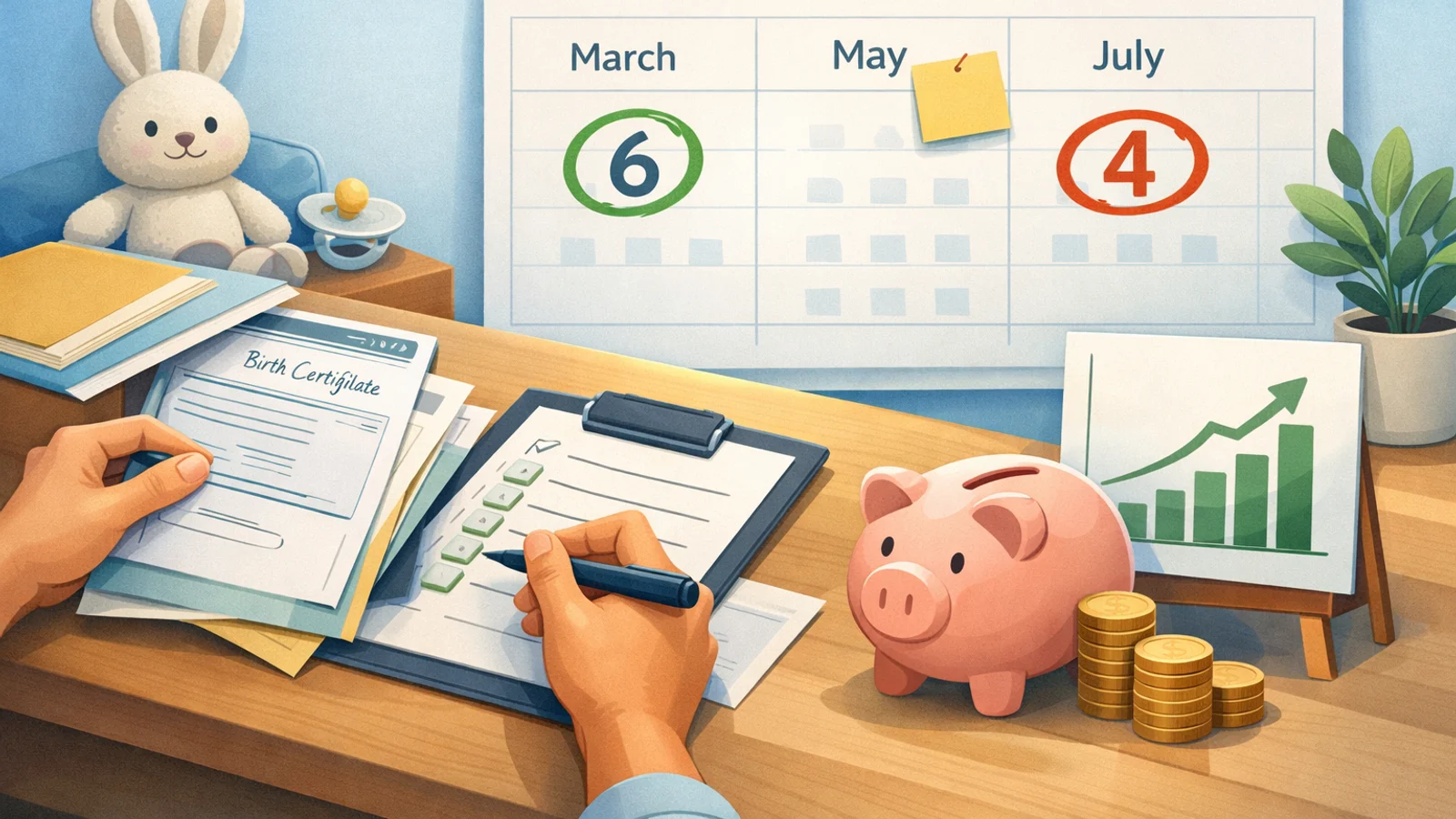
Parents are hearing a lot of questions right now about the new child savings account rollout planned for 2026. The biggest point of confusion is simple: families may start seeing activation instructions around May 2026, but regular private contributions are not expected to begin until July 4, 2026. The IRS also recently issued proposed regulations tied to the federal pilot contribution, which adds more detail about who may qualify and how the process is expected to work. (irs.gov)
What parents are asking right now
Here are the most common practical questions we are seeing as of March 18, 2026:
- When can I open or activate the account? Current public guidance points to activation notices or instructions starting around May 2026. (nase.org)
- When can I put money in? Public materials indicate contributions from family and other private sources are expected to start on July 4, 2026. (nase.org)
- Will every child get the same government-funded amount? The recent IRS announcement describes a one-time $1,000 pilot contribution for each eligible child, subject to the rules in the proposed regulations and required elections. (irs.gov)
- Which children appear to be included? The IRS says the pilot program applies to eligible children born in calendar years 2025, 2026, 2027, or 2028. (irs.gov)
- Do parents need to do anything? Yes. The IRS says parents who want to participate need to make an election, so this does not look like a fully automatic process for every family. (irs.gov)
The current timeline, in plain English
If you are planning around the 2026 launch, this is the practical version:
- Now through spring 2026: gather your child’s records and watch for official program instructions from Treasury or the IRS. This is still a rollout phase, not a fully active contribution window. (irs.gov)
- Around May 2026: families may begin receiving activation or election instructions. (nase.org)
- July 4, 2026: expected start date for private contributions. (nase.org)
- After launch: families should keep records of elections, contributions, and any notices tied to eligibility. This is a sensible planning step based on how tax-advantaged accounts are usually administered. (irs.gov)
What parents can do now
You do not need to wait passively. A simple checklist can make the rollout easier.
1) Confirm your child’s basic records
Have these ready:
- Full legal name
- Date of birth
- Social Security number or taxpayer identification details, if required in the final process
- Your latest tax filing information
- A safe place to store election and activation notices
The reason this matters is that the IRS has already said parents will need to make an election for the pilot contribution process. (irs.gov)
2) Build a starting contribution plan now
Even though contributions are not expected to begin until July 4, 2026, you can still decide in advance:
- How much you want to contribute monthly or yearly
- Whether grandparents or other relatives may help
- Whether you want a one-time deposit or automatic ongoing contributions, if available once the program opens
Public summaries have described a $5,000 annual private contribution limit from family members and other individuals, but families should wait for final operational details before assuming exactly how every contribution channel will work. (nase.org)
3) Avoid mixing this up with other child savings options
This new program is not the same thing as a 529 plan, a Coverdell ESA, or a custodial account. Those accounts have different contribution rules, tax treatment, and spending restrictions. For example, Coverdell ESAs have a separate annual contribution cap and are designed specifically for education expenses. (eitc.irs.gov)
That does not mean one option is always better than another. It means parents should compare goals carefully before moving money.
A simple way to compare your choices
When parents ask whether they should wait for the 2026 rollout or keep using existing accounts, these are the right questions:
- What is the goal? Long-term savings, education, general support, or retirement-style saving?
- When will the money be needed? In childhood, for college-age costs, or much later?
- How flexible do you need withdrawals to be?
- Are you expecting relatives to contribute?
- Do you want to keep using a 529 or other account alongside this one?
Because the new account rules are still moving through the public rollout process, a cautious approach makes sense. Families do not need to stop all other saving while they wait for clearer operating instructions. That is a planning judgment, not a legal conclusion. (irs.gov)
Questions to ask before July 4, 2026
Before the contribution window opens, parents may want clear answers to these points:
- How is the account activated?
- What exact election is required?
- What documentation proves eligibility?
- Can more than one adult contribute?
- How are contribution limits tracked across different contributors?
- What investment options, if any, are offered inside the account?
- What are the withdrawal rules later on?
Some of these answers are partly addressed in public summaries, but not every operational detail appears settled in the materials currently available. (irs.gov)
What Kid Saving Account recommends parents do next
Kid Saving Account is not a government agency, and families should rely on official Treasury and IRS instructions for the final enrollment process. Still, the planning steps are straightforward:
- Watch for notices around May 2026
- Prepare for contributions starting July 4, 2026
- Keep your child’s records organized
- Decide your first-year contribution budget now
- Compare this new option with any 529, ESA, or custodial account you already use
- Review tax or legal questions with a qualified professional if your situation is complex
For most parents, the best move right now is not to guess every future detail. It is to get organized, follow the official rollout dates closely, and be ready to act when the contribution window opens on July 4, 2026. (irs.gov)